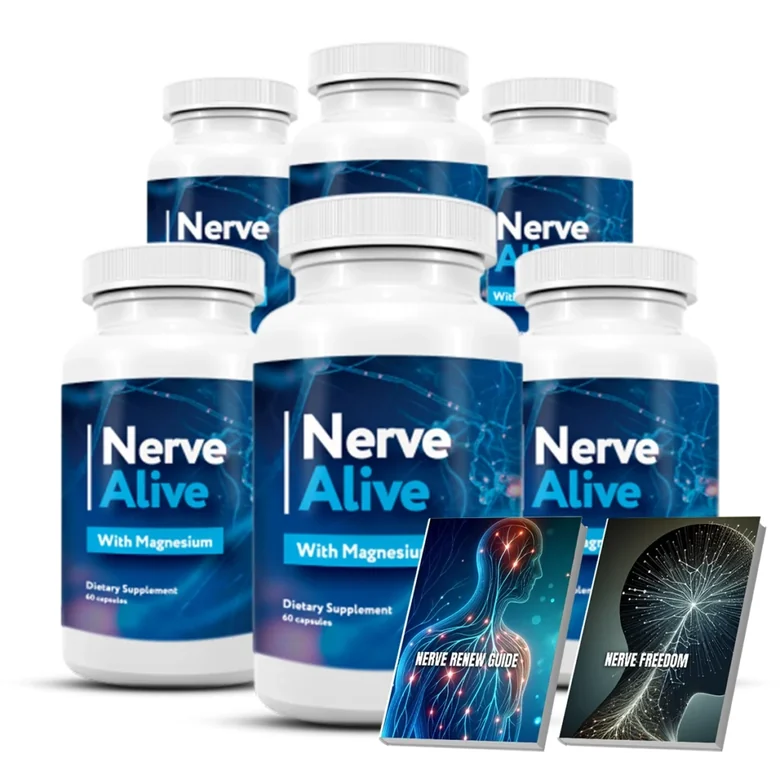
NerveAlive Reviews
NerveAlive customers consistently mention appreciating the named-ingredient transparency, with results described as gradual over a full season of use.
The main criticisms are the lack of a dedicated clinical trial and individually varying results.
What customers consistently mention
Label transparency is frequently mentioned. Several reviewers specifically cite appreciating that every ingredient is named, rather than a vague blend.
Results are gradual, not immediate. The most credible feedback describes changes building over a full season of consistent daily use.
Customers value the honest framing. Reviewers specifically mention feeling more comfortable trying a product framed as wellness support rather than a dramatic medical promise.
Three customer accounts

“Appreciated that the label names every ingredient. Been taking it daily for a few months alongside my regular routine.”

“Simple once-daily routine. Went with the 3-bottle pack to give it a fair, consistent trial.”

“Glad it's framed honestly as wellness support rather than a miracle claim. That's what made me comfortable trying it.”
The common criticisms
No dedicated clinical trial on the finished product. The individual ingredients, Alpha-Lipoic Acid and Benfotiamine especially, have published research behind them; the specific NerveAlive combination itself has not been separately tested.
Results vary considerably between individuals. As with any supplement, response depends on baseline health, consistency of use and individual physiology.
Some marketing overreaches. We've seen promotional content around this product category describe regenerating nerve tissue or treating diagnosed neuropathy. These claims go beyond what any supplement can honestly support, and we do not repeat them.
An honest overall assessment
NerveAlive is a reasonably labelled nerve wellness supplement, distinguished mainly by combining Alpha-Lipoic Acid and Benfotiamine — two of the more researched ingredients in this category — with complementary vitamins and minerals. Its main limitation is that the finished formula has not been the subject of its own clinical trial, and it is not, and should never be marketed as, a treatment for diagnosed nerve conditions.
What it is not, under any framing, is a substitute for medical evaluation of persistent tingling, numbness or nerve pain — that always deserves a doctor's attention first.